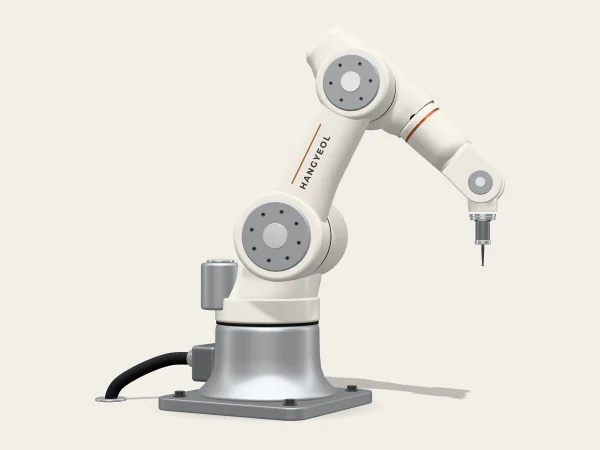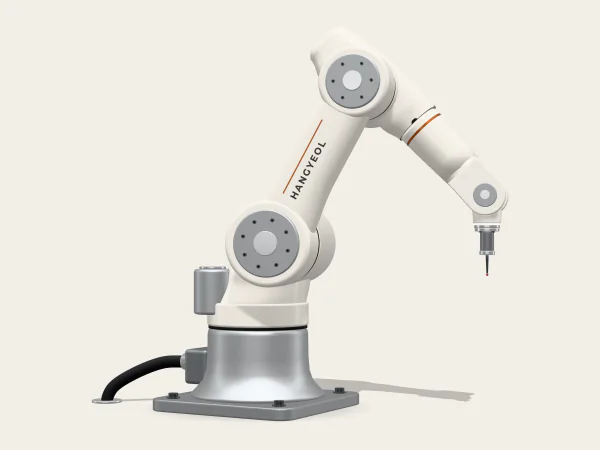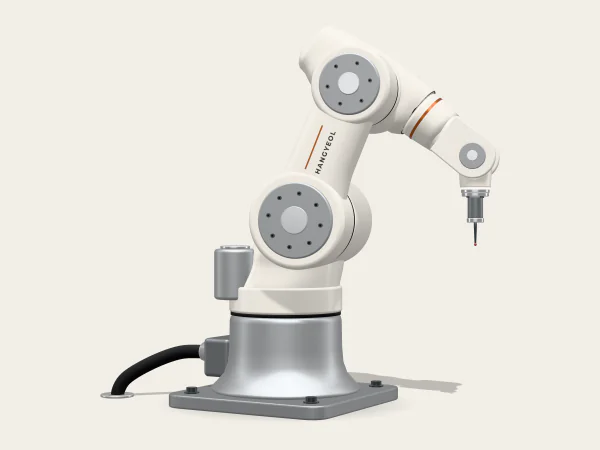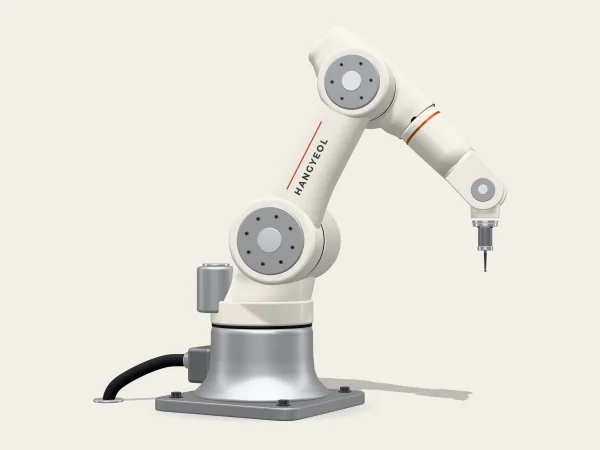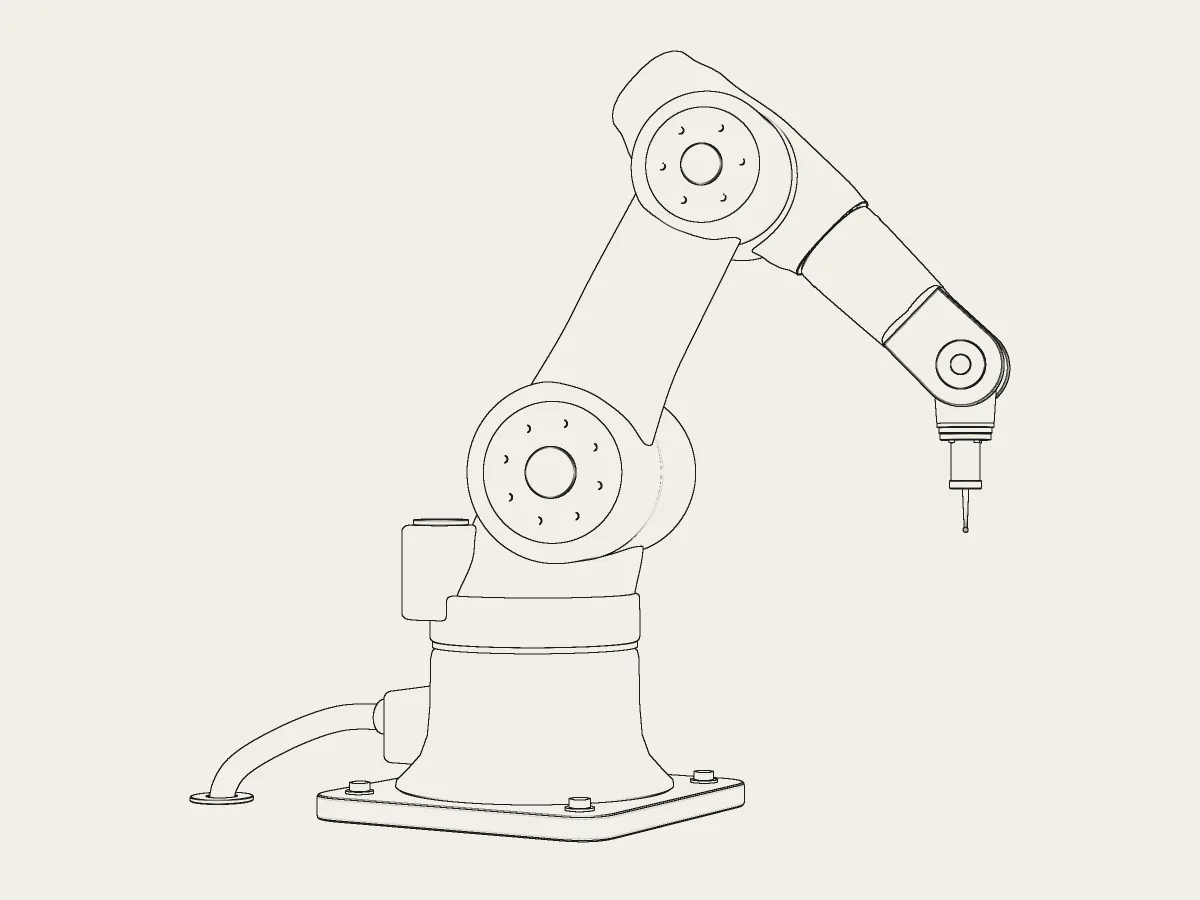
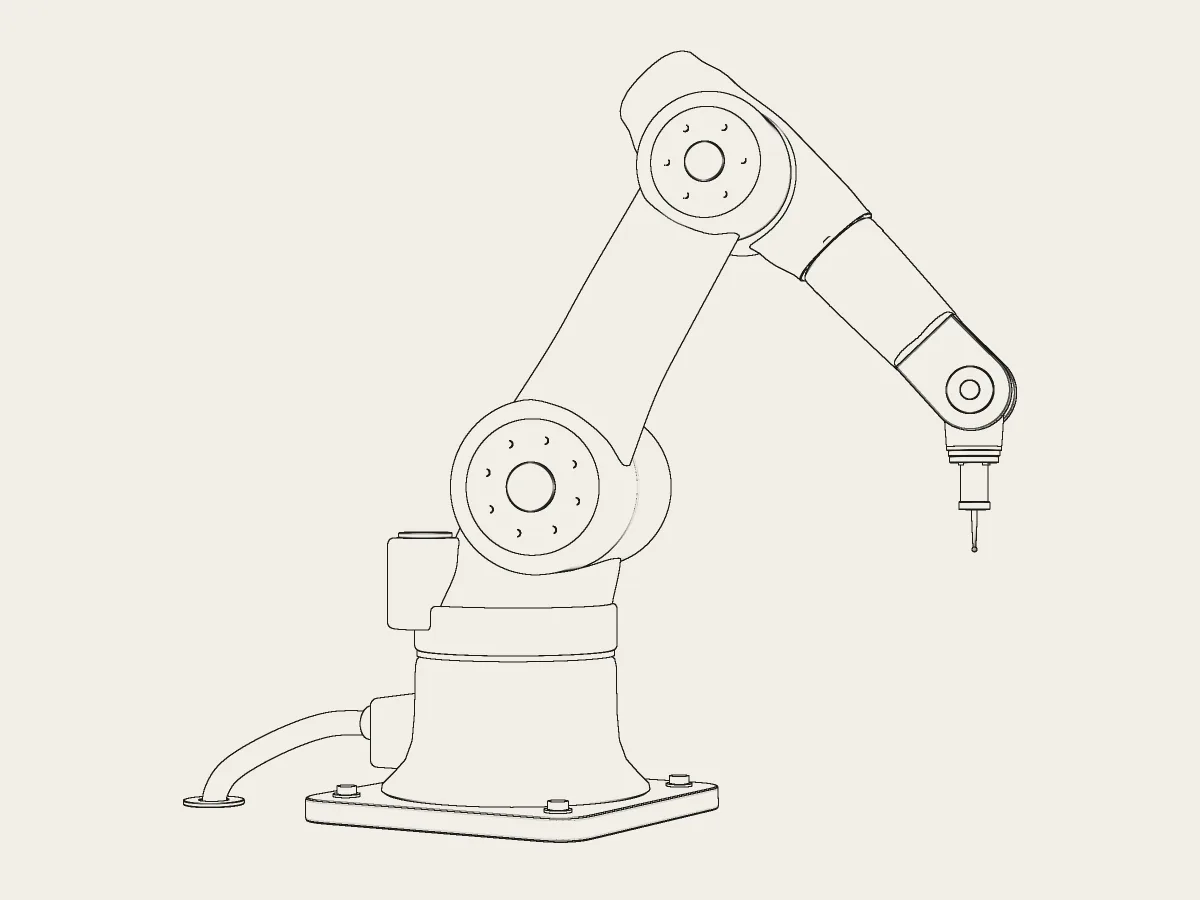
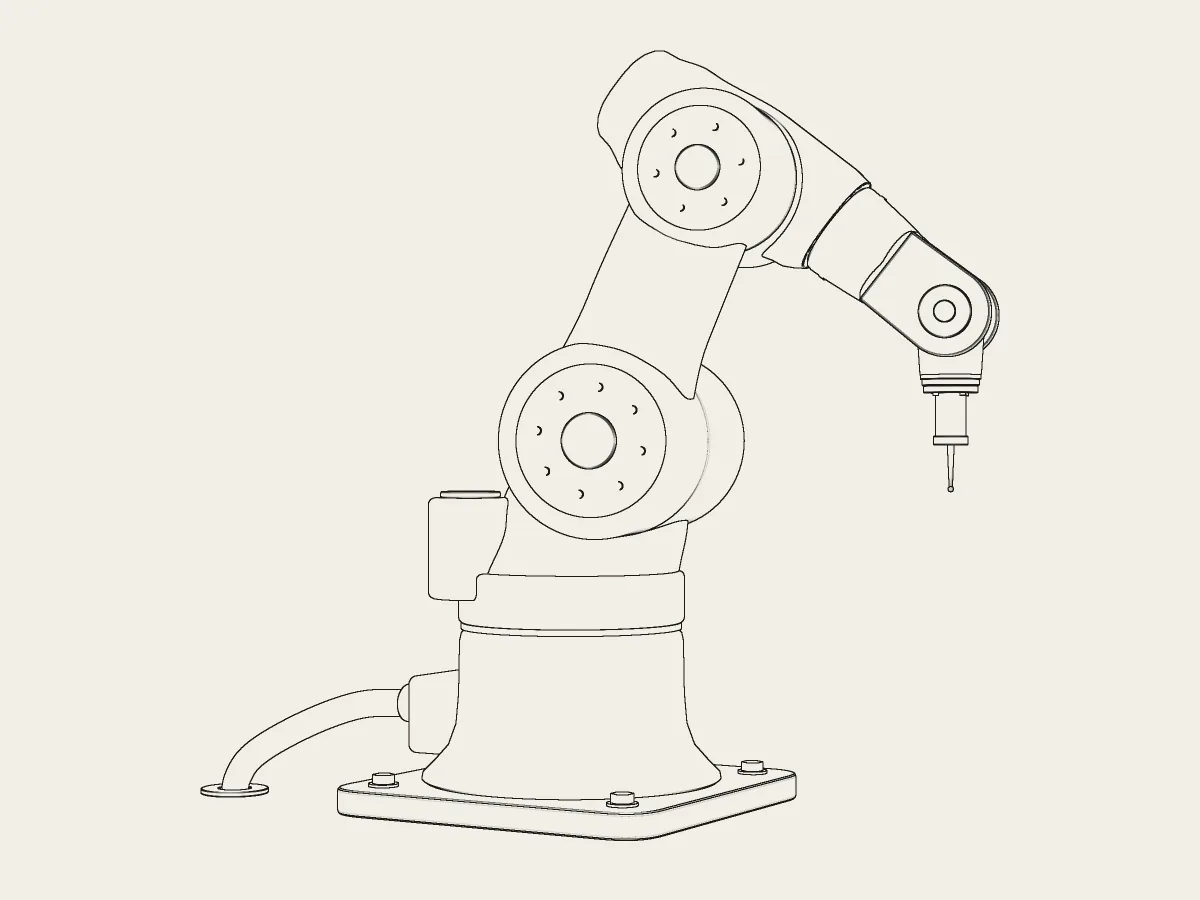
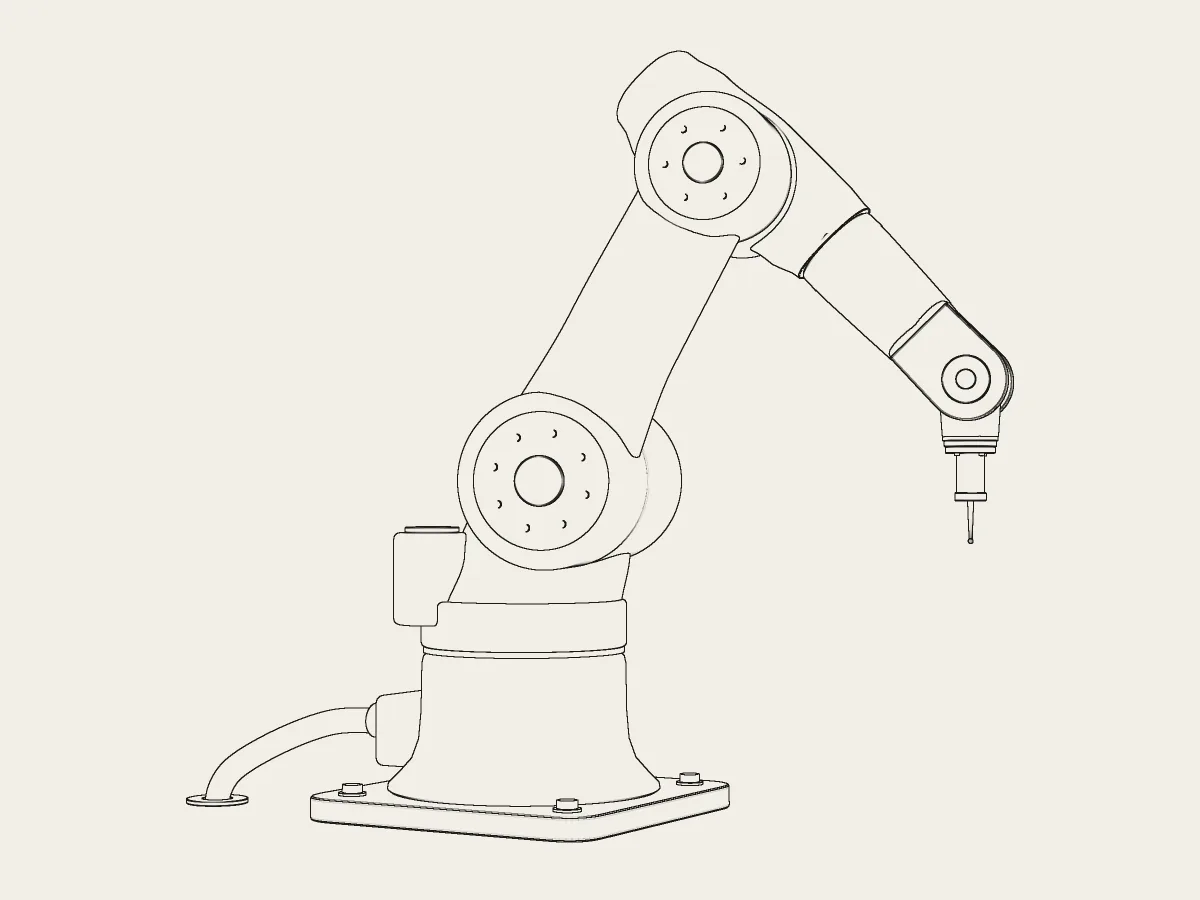
Hangyeol Robotics is launching the second generation of its HG-C collaborative robots. The biggest change is a torque sensor in each of the six joints. Some first-generation joints estimated force from motor current. Every second-generation joint measures it directly.
Direct sensing picks up contact with a person or an object at lower forces. That allows tighter collision detection and force limits, and hand guiding, where you teach a position by moving the arm by hand, feels lighter.
The lineup runs from the 5 kg (11 lb) HG-C5-09 to the 25 kg (55 lb) HG-C25-17. Repeatability is ±0.03 mm on the two smaller models (HG-C5-09 and HG-C10-13), ±0.05 mm on the HG-C16-10 and ±0.1 mm on the HG-C25-17. All 18 safety functions are designed to ISO 13849-1 PL d / Cat. 3.
A light ring around the tool flange shows idle, running, collaborative slowdown, and stop in different colors, so people nearby can read the robot at a glance. The HGC-7 controller, the 12-inch HGT-12 teach pendant, and Hangyeol Studio carry over, and Hangyeol Studio converts first-generation programs for the new arms.
Orders open today, and first units ship in December. Parts and service for first-generation robots continue. Whether an application can run collaboratively is decided by a risk assessment of the whole application, including tooling, workpieces, and nearby equipment, so plan that review with our support team before you deploy.