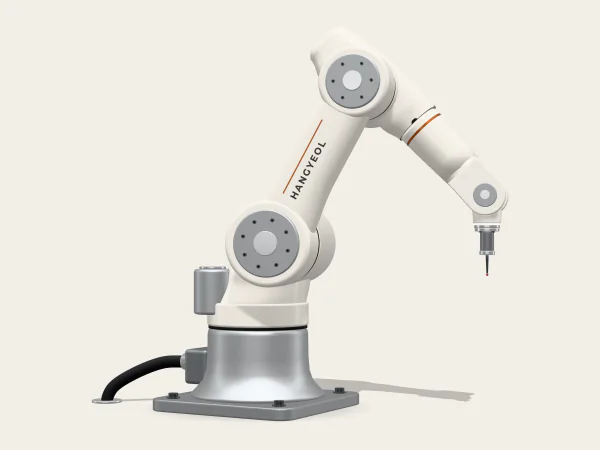
Collaborative robots
HG-C10-13
Our flagship cobot: 10 kg and 1,300 mm, from machine tending to welding
- Payload
- 10kg
- 22 lb
- Reach
- 1,300mm
- 51.2 in
- Repeatability
- ±0.03mm
 Asher Kim Portfolio №02 · This is a fictional company. No real quotes, orders, or consultations. · Fictional company
HG-DWG-000 · Hangyeol Robotics website
Application 3 of 8
The robot pauses at the door, goes straight in to set the blank in the chuck, and comes back out the same way. It keeps machines running through the night.
Process sequence
Scroll down and each step lights up in copper on the plate.
A camera locates the blank in the tray and the robot picks it.
When the cycle ends and the door opens, the robot gets the signal and moves in.
A dual gripper pulls the finished part and sets the blank in the chuck.
Once the robot is clear, the door closes and machining starts.
Chips and coolant are blown off the finished part before it goes into the tray.
Design points
Unload and load in a single visit. That keeps the door-open time short.
Door open, cycle complete, and chuck open/close signals pass between the HGC-7 and the machine PLC. We verify the machine-side wiring with you before commissioning.
Area scanners slow or stop the robot when someone approaches. Speeds and distances come from the risk assessment.
Recommended robots
Machine tending is about keeping spindles turning. While a person loads and unloads, the machine waits, and when the shift ends, the machine stops too. With a robot on the job, the machines keep cutting through the night until the planned quantity is done.
Place an HG-C10-13 cobot between two facing CNC machines and one robot runs both. Blanks and finished parts sit in drawer-style trays, and operators only swap the trays.
When machines are spread across the floor, the HG-M600C mobile manipulator makes the rounds. For heavy blanks, use the HG-R25-18 or HG-R210-27.
Collaborative robots
Our flagship cobot: 10 kg and 1,300 mm, from machine tending to welding
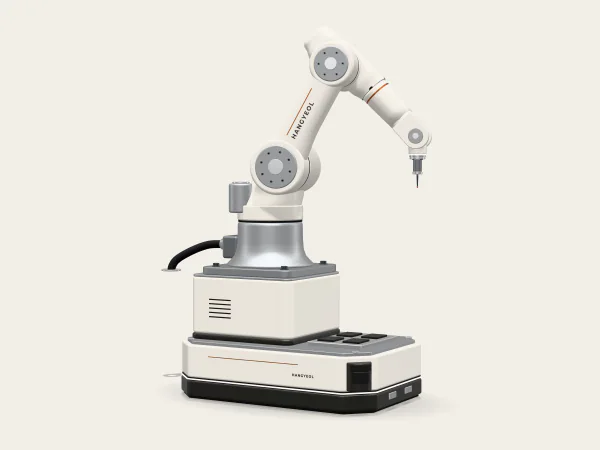
Mobile robots
An HG-M600 with an HG-C10-13 cobot on top that moves between stations and works with its arm
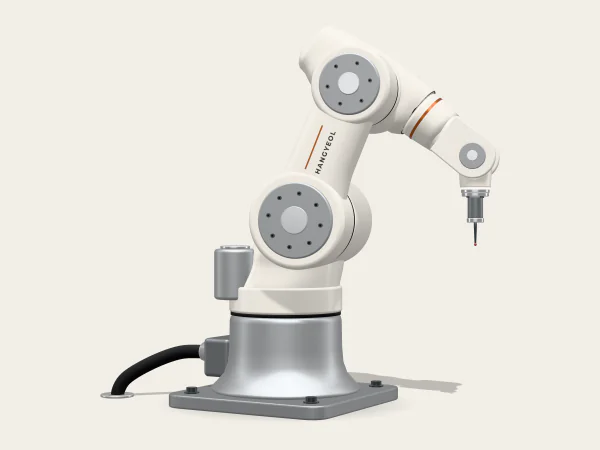
Collaborative robots
16 kg and 1,000 mm: a cobot for heavy tools in screwdriving and tending
Cases
Changwon, Gyeongnam · Precision machining shop
HG-C10-13 × 3
9hoursUnattended night runExample
Industries that use this process most
Share part drawings or a video of the current process. An application engineer will work through the cell layout and cycle time with you.